


2026-09-05
A Welcome Coincidence for Sweden, as Its Election Could Derail EU Tobacco Tax Deal Over Snus and Nicotine Pouches
Home Politics Europe A Welcome Coincidence for Sweden, as Its Election Could Derail EU Tobacco...
Sweden’s possible delay of EU tobacco tax reform comes as new Cochrane evidence strengthens the case for risk-based vaping and nicotine policies.
As Europe’s endeavor to overhaul tobacco and nicotine regulation approaches a critical point, Sweden’s election is threatening to delay agreement on new EU tobacco taxes, at a time when stronger scientific evidence emerges for vaping as a smoking-cessation tool.
At its heart is a fundamental question for European tobacco policy: should cigarettes and smoke-free nicotine products be progressively regulated in similar ways, or should taxation and regulation reflect their highly different risk profiles?
The Swedish position is particularly significant given that its nicotine market looks very different from much of Europe.
Sweden has historically experienced widespread snus use and more recently growing uptake of nicotine pouches, while maintaining exceptionally low cigarette smoking.
He argues that narrowing the price advantage of smoke-free alternatives over cigarettes could weaken the incentive for smokers to switch.
That principle—lower risk, lower tax—is increasingly important as Brussels considers not only the TED but a much broader overhaul of European tobacco policy.
The regulatory debate comes as the evidence supporting vaping for smoking cessation has strengthened again. The often-referenced recent Cochrane review published on August 26 examined 80 randomised trials involving 29,861 smokers and concluded that nicotine e-cigarettes help more people quit than traditional nicotine replacement therapies such as patches and gum.
Cochrane describes the evidence that vaping increases cessation compared with NRT as “high certainty.
He argues that increasingly restrictive regulation risks limiting access to precisely the alternatives capable of helping smokers leave cigarettes behind.
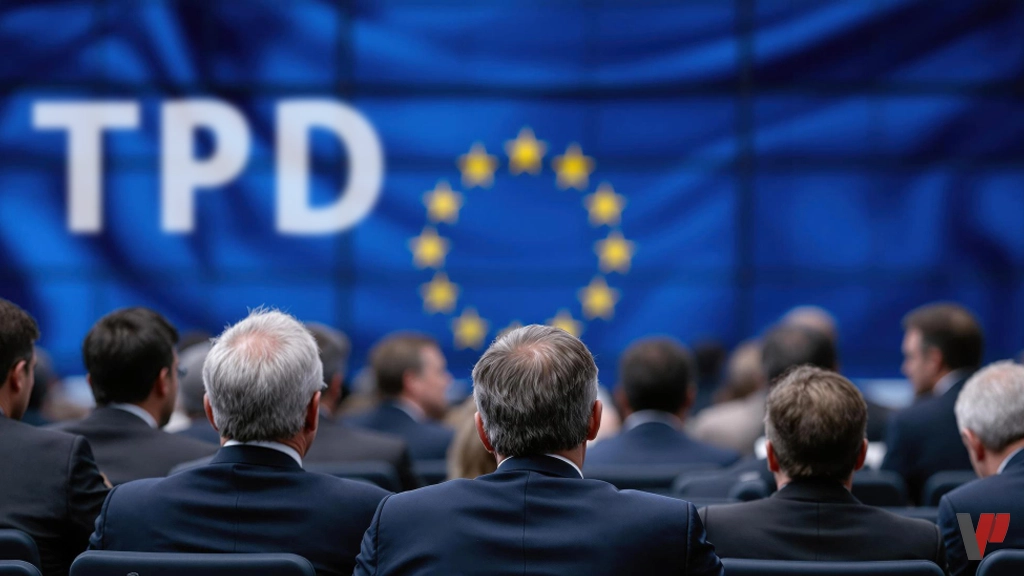
The European Commission closed its latest public consultation on revisions to the Tobacco Products Directive (TPD) and Tobacco Advertising Directive on August 14, with legislative proposals planned before the end of 2026.
Harm reduction advocates agree that youth access requires effective controls but dispute the concept that this necessitates regulating non-combustible alternatives increasingly like cigarettes.
Nicotine abstinence vs harm reduction: what will prevail?
This distinction increasingly separates two competing visions for European policy.
The different prioritises eliminating cigarette smoking, accepting that some consumers may proceed using nicotine through substantially less hazardous products.
If cigarettes and smoke-free alternatives become similarly expensive, some of the economic incentive for switching disappears.
It must determine what outcome its nicotine policy is designed to attain.
Sweden provides one real-world example of a market where nicotine consumption persists, but cigarette smoking is exceptionally low.
With both the TED and wider tobacco legislation under review, Brussels has an opportunity to location that distinction at the centre of policy: maintain strong protections against youth uptake and smoking while ensuring grown-up smokers retain affordable access to regulated alternatives.
80,000 Responses Later, Will the EU Listen to the Evidence on Tobacco Harm Reduction?
Get news and current headlines about vaping every Friday.